Which market foods survive a travel day
Food from a market can be the most honest souvenir and the most fragile. Heat, bag pressure, and crossing rules decide more than appetite. Dense, dry, and sealed is a useful first filter — not a permission slip.
Travelers often buy food when the day feels generous: a jar that looks like a gift, soft cheese wrapped in paper, sweets still warm from a tray. By evening the same choices can stain a shirt, sour in a warm bag, or stop at a control point. The question is not whether the food was good at noon. The question is whether it can finish the journey you actually have.
I use a short filter before money changes hands. It does not replace the official rule for your route. It only keeps the most common failures from becoming surprises later.
Start with dense, dry, and sealed
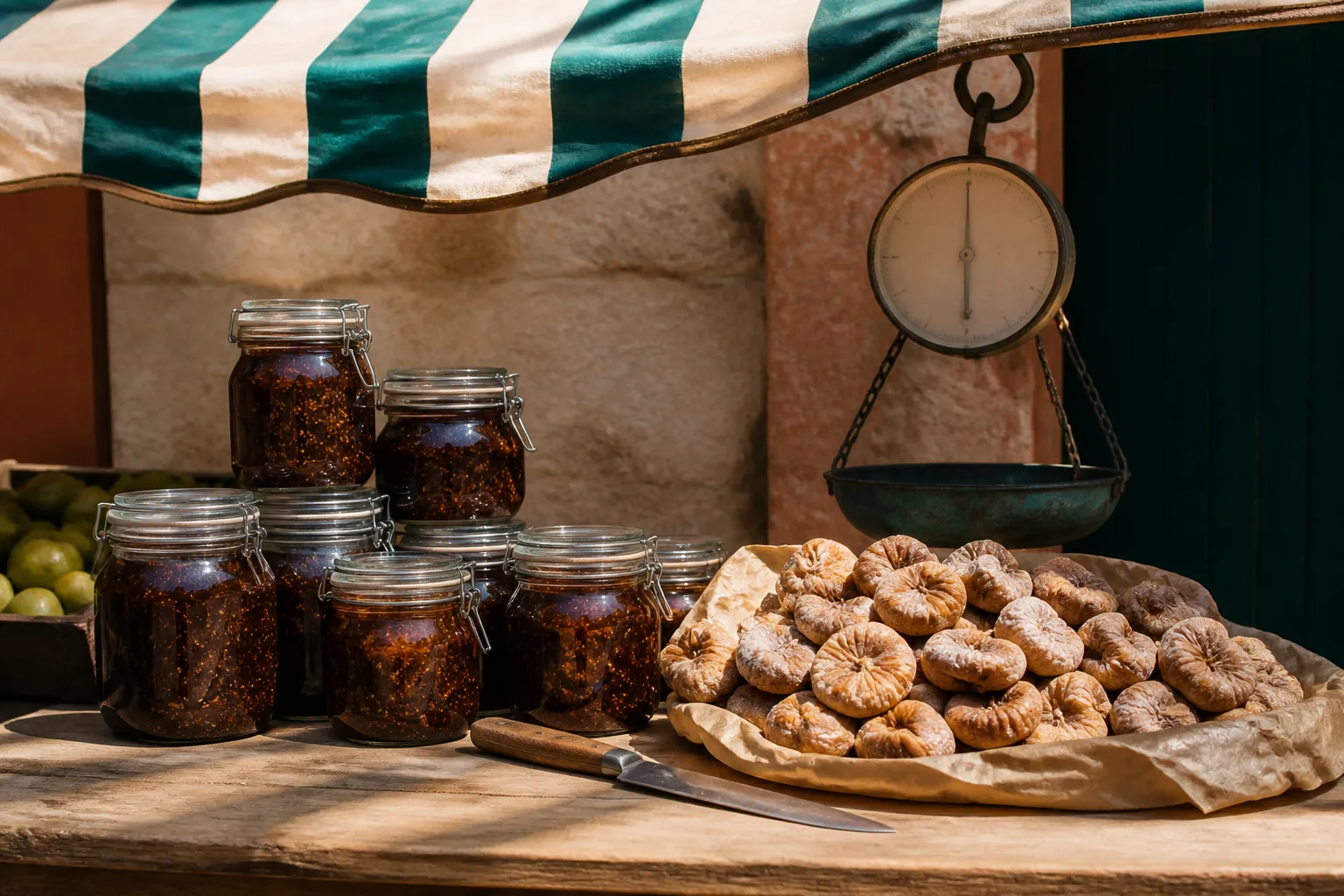
Goods that often last a warm travel day tend to share three traits. They are dense rather than watery. They are dry rather than fresh. They are sealed rather than wrapped in paper that will weep oil or juice. Dried fruit in a closed packet, hard biscuits in a factory seal, and a jar with an intact lid usually travel better than open sweets or soft dairy.
Sealed does not mean immortal. A glass jar can still crack. A metal lid can loosen if the bag is crushed. Treat the seal as a starting advantage, then pack as if the container will be knocked once.
A food that needs a refrigerator before sunset is already arguing against your itinerary.
What fails on the first warm afternoon
Soft cheeses, wet sweets, cut fruit, and anything leaking oil or syrup are poor travelers. So are foods that must stay cold and foods sold in open paper that softens in a packed bag. If you can smell the item strongly through its wrapping at the stall, assume it will announce itself to everything else in your luggage.
- Fresh dairy and soft cheeses
- Wet or oil-soaked sweets
- Cut fruit and open salads
- Jars with loose or damaged lids
- Anything that needs continuous cold
Crossing rules are not optional flavor text
Some edible goods cannot pass a control point even when they are sealed and dry. Rules differ by route and change between seasons. A briefing or field note can name categories that often cause trouble. It cannot clear an item for you. Before you bargain for a jar, read the public rule that applies to your journey.
- Name the food category in plain language — meat, dairy, fresh plant, sealed preserve.
- Check the published restriction for that category on your route.
- If the rule is unclear, leave the item or ask an official source, not only the stall.
- Pack only what you are prepared to surrender without spoiling the rest of the bag.
Pack food as if it will leak
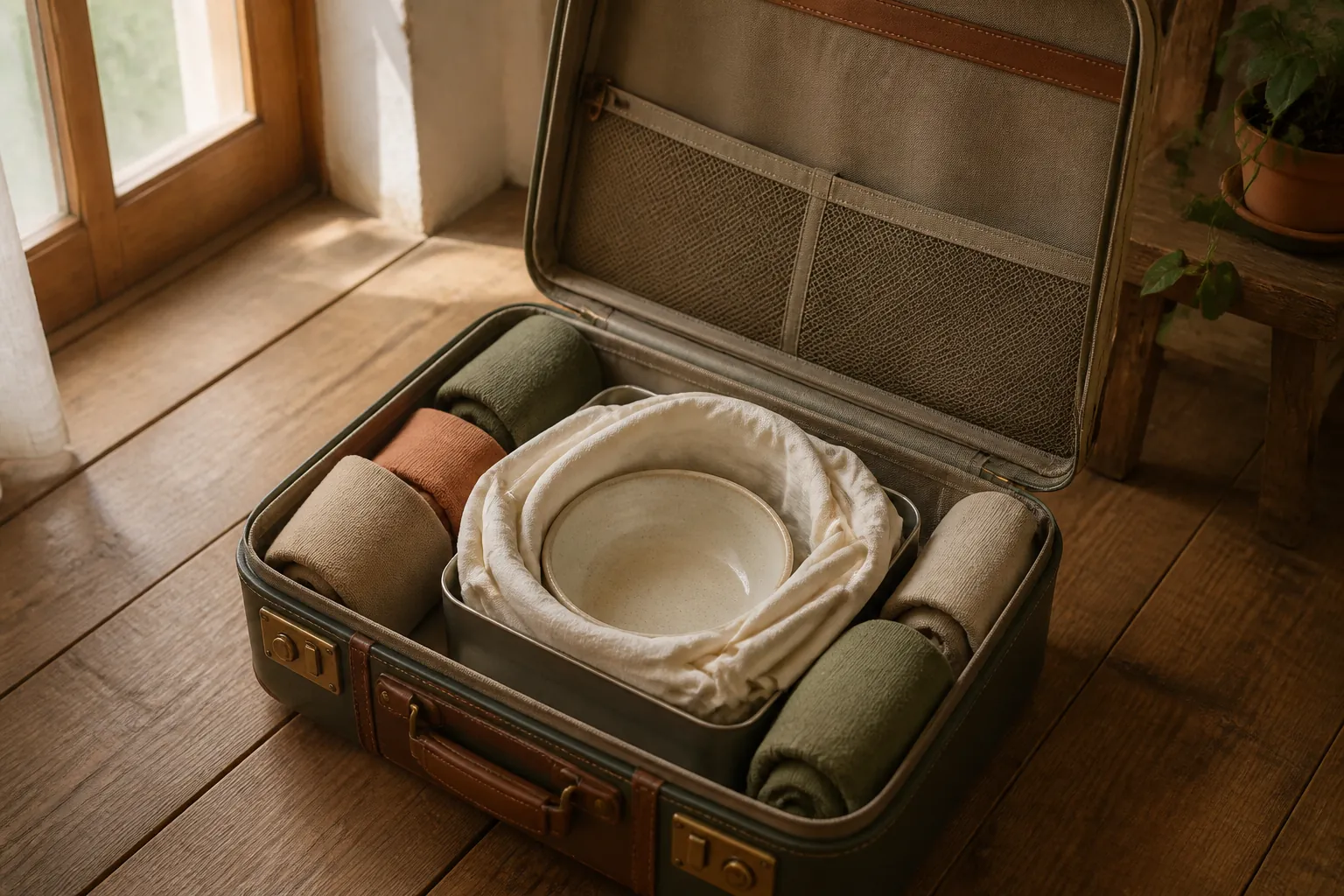
Even a good candidate needs isolation. Put sealed jars in a secondary bag. Keep them away from clothes you cannot wash soon. Do not nest food against fragile ceramics. If a lid fails, you want the mess contained.
Soft wrapping around a jar is not enough if the bag will be compressed. Give the container a pocket of its own, or surround it with rolled clothes that cannot become a hammer. Recheck lids after every long walk. A seal that held at the stall can loosen after stairs and a crowded bus.
Gift food is the hardest case. Generosity at noon becomes a problem at the evening check when the jar is heavy, restricted, or already warm. If the gift has no clear use and no clear legal path, a shared meal at home usually travels better than an object chosen in a hurry.
Markets change. So do rules. Use this note as a method for the stall, then confirm the day's restrictions for yourself. Appetite is allowed. Wishful packing is not.