

About the project
We write from the stall, then we brief before the next walk
isocheimic is a small practice that turns repeated market visits into notes a traveler can use on a single morning.
This page is about how that practice started, how a note is checked before it reaches a client, and where we draw a line. We consult. We do not sell goods, book rooms, or run a shopfront.
Beginnings
Why a market, and not another souvenir list
The project did not begin as a company. It began as a pile of objects that had no work to do once the bags were unpacked: printed cloth that never sat on a table, miniatures that looked identical to ones seen two towns earlier, jars that leaked into a shirt. Each trip produced the same mild embarrassment. The purchases had been made in a good mood, in a hurry, under awnings that felt like the whole place.
What changed the pattern was a slower morning in a covered arcade, standing still long enough to watch who bought soap, string, and greens, and who stopped only at the trays aimed at visitors. The household row was not romantic. It was specific. It showed what grew nearby, what was mended, and which workshops still sent work down the street the same week it was finished.
We chose markets because they concentrate that information in one walkable grid. A museum label can be rewritten. A stall restocks in public. If a glaze fault repeats across twenty bowls, you can see it. If a food row is for the neighborhood, the quantities say so without a speech.
isocheimic exists to keep that kind of looking from being a private hobby. The same questions kept arriving from friends: what is worth the weight, what will spoil, when a bargain is ordinary talk and when it is a slight. We turned the answers into a method, then into consultations, so a traveler could borrow the notebook without pretending the next market will match the last one.
Editorial method
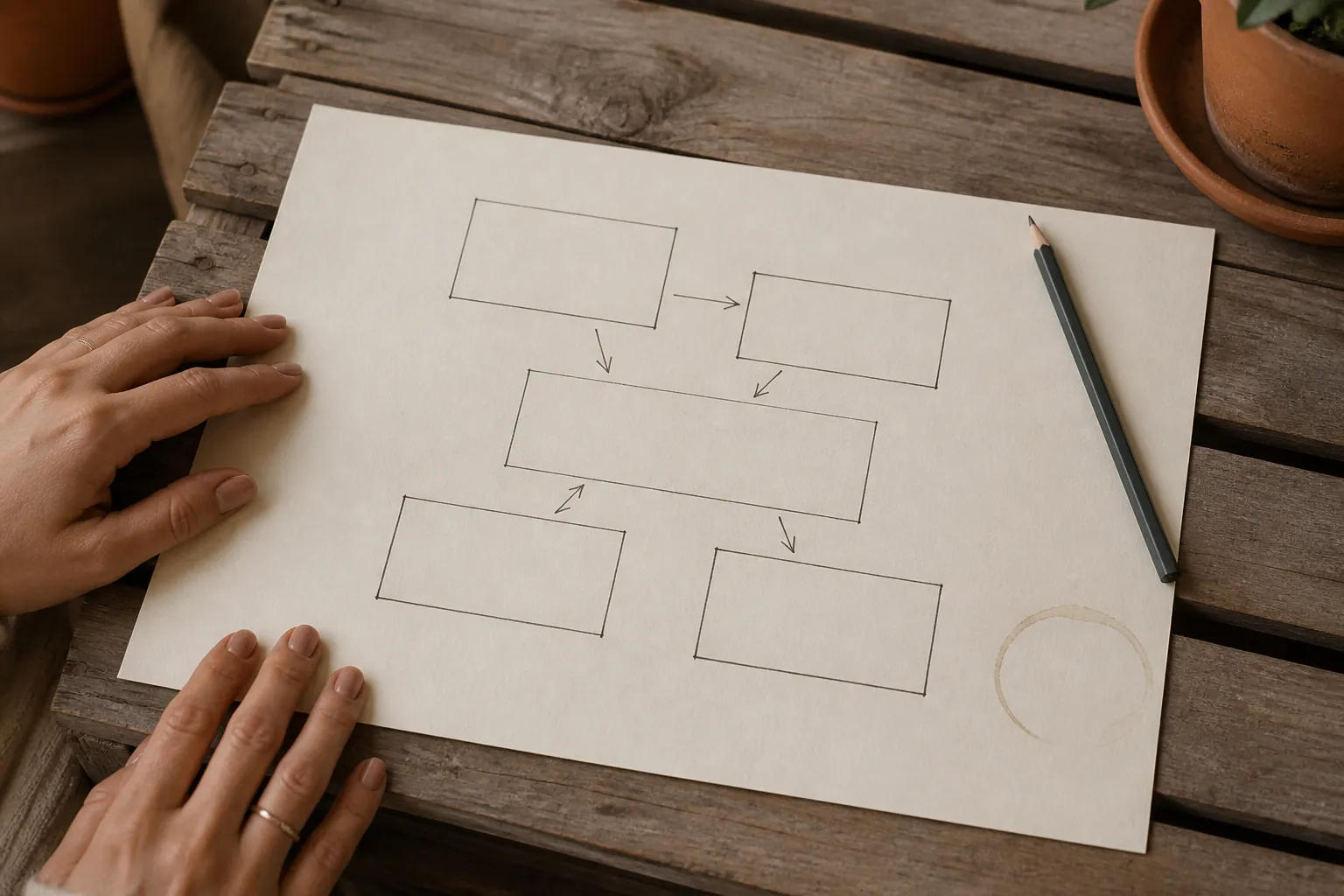
A note is not published until it survives a second look
First visits are for orientation: where the food is, where hardware sits, where the repeating visitor goods begin. We do not treat a single circuit as evidence. Light changes, deliveries arrive, and a stall that looks local at dawn can be restocked from a van by noon.
Second visits, or a conversation with someone who uses the market as a weekly shop, are how we check the first impression. We write down materials, smells, joins, and whether the seller made the piece, bought it from a neighbor workshop, or received a sealed carton. If we cannot name that path, the sentence does not go into a briefing.
We also keep a refuse list. We do not freeze opening hours as if they were architecture. We do not publish “must carry home” catalogues. We do not invent a craft tradition because a label looks old. When a partner workshop lets us watch a week of work, that access is described as access, not as a secret.
Clients receive the checked version: what we saw, what we could not confirm, and which questions still belong to the traveler on the day. The notebook stays a notebook. It does not become a guarantee that a stall will be in the same place next season.
From first message to a note
How a briefing is actually assembled
A consultation is a written packet for the market stretch of a route. It is not a booking, a purchase, or a running commentary in your pocket. The steps below are the same whether the walk is a harbor arcade or a highland square.
-
We ask what the bag can still hold
The first message should name remaining space, whether food is even a candidate, and whether gifts are expected. Without those limits, advice drifts into shopping. We also ask how you usually walk a town: early, with children, or in a short window between connections.
-
We match the request to notebooks, not to a mood
Helena’s stall maps, Julian’s packing patterns, and Sana’s notes on what spoils or cannot cross a control point are read against your constraints. If we have not walked a comparable market type, we say so. Inventing confidence is not part of the method.
-
You receive a short packet, not a tour script
The note says what to look at first, which questions to ask before paying, and which categories are poor travelers for your bag. It names uncertainties. It does not tell you which stall to love. You still decide whether to buy anything at all.
-
We stop where a shop or an officer should start
We will not buy on your behalf, hold goods, or interpret a live control-point decision. If a plan involves legal limits on items, we point you toward the relevant public rules and, when needed, toward licensed advisers. The briefing ends at the edge of our notebooks.
Visitor manners
A stall is a workplace, not a backdrop
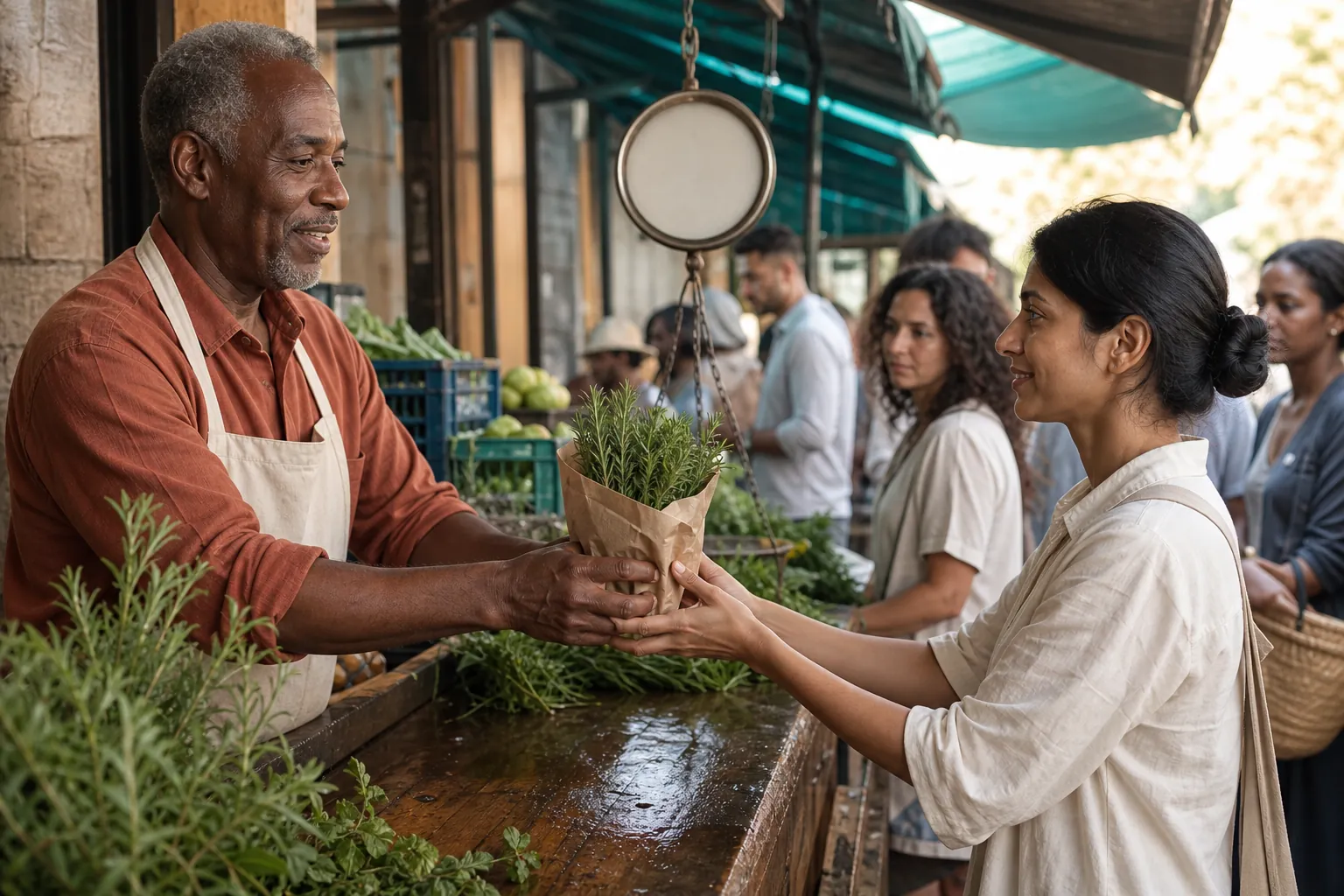
Markets feed and supply people who live there. A traveler who treats the aisle as a stage will miss the work and get in its way. We ask clients to stand aside for regulars, to keep bags out of the weighing space, and to ask before photographing a person or a private workspace behind a stall.
Bargaining, where it exists, is local manners. Copying a scene from another town is how a conversation turns into a slight. If prices are posted and locals pay them, start there. If a back-and-forth is clearly part of talk, watch one exchange before you join it. Paying fairly is not a souvenir of virtue. It is the minimum for using someone else’s workplace as a classroom.
We also refuse the habit of collecting people as types. A briefing may describe a row of repair tools or a food stall’s rhythm. It will not instruct you to extract a story from a seller for later retelling as color. If you leave with nothing but a clearer map of the square, the morning still did its job.
Borrow the view, pay for what you take, and do not confuse attention with entitlement.
A working rule we keep in every packet, including our own trips.
Who lets us watch
Partnerships we keep, and how they are chosen
Access is not a badge. We work with a small set of workshops, cooperatives, and study groups that will let us observe ordinary work without staging it for visitors. Each name below is a working relationship, not an endorsement marketplace.
- Lantern Row Cooperative
- A household-goods workshop circle that allows two of our researchers to sit through a production week: clay, handles, drying racks, and the moment pieces leave for the market. We do not list their stalls as a shopping map. We use the week to learn how “made this week” actually looks in the hand.
- Midland Weavers Exchange
- Independent weavers who still finish cloth on site rather than restocking printed lengths. The exchange sets the terms: no staged photo days, no pressure to buy, and a clear line between their teaching samples and goods meant for sale. That boundary is why we trust their explanations of weave and dye.
- Saltbridge Food Rules Desk
- A study group that tracks public rules on carrying food across control points. They do not clear items for anyone. They help us keep our edible-goods notes aligned with published restrictions, and they remind us to send travelers back to the official text when a rule has shifted.
- North Harbor Packing Studio
- The studio where Julian trained, and where we still test wrapping sequences on awkward shapes. They lend a packing bench, not a shipping service. If a piece cannot be described as a sequence of wrap, sleeve, and outer bag, we do not pretend it is a good traveler.
Ask for a briefing before the market morning
If a walk through stalls is already on your route, send the limits of the bag and the kind of square you expect. We reply with a focused note, not a catalogue. If the notebooks do not cover that market type, we will say so before any work begins.
Request a ConsultationField notes published for anyone to read
Alongside private briefings, we publish longer pieces on stall reading, packing, edible goods, and manners at the counter. They are not a substitute for a route-specific note, and they are not shopping lists. They are the public side of the same notebooks.
Learn MoreHow to read this site
Materials for orientation, not a substitute for local rules
isocheimic publishes field notes, packing guidance, and consultation summaries so travelers can prepare the market stretch of a journey with more care. The information on this site is educational and intended to introduce our approach. It is not a personal instruction for a named route, a guarantee that an object will arrive intact, or permission to carry a specific item across a control point.
Markets, opening hours, stall mix, and crossing rules change between visits. A note written after one trip can be stale on the next. Confirm hours, food restrictions, and packing limits with the relevant authorities and with people on the ground before you travel.
We recommend speaking with qualified specialists when a plan involves medical needs, legal limits on goods, or complex connections. Our team shares observational practice; we do not replace customs officers, carriers, or licensed advisers.
Any purchase, packing choice, or conversation at a stall is your own decision. isocheimic is not responsible for damaged goods, refused items, extra weight charges, or the way an object looks once it is in your house.
Place names in our materials are used as types of setting — a harbor market, a highland square, a covered arcade — rather than as a promise about a particular destination. Conditions on the day always take priority over a page you read at home.