Packing clay and glass without a special kit
Fragile finds fail in bags for ordinary reasons: hard corners meet hard walls, soft wrap collapses, and the last evening’s rush replaces a clear sequence. You do not need a specialty kit. You need a method you can describe out loud before you pay.
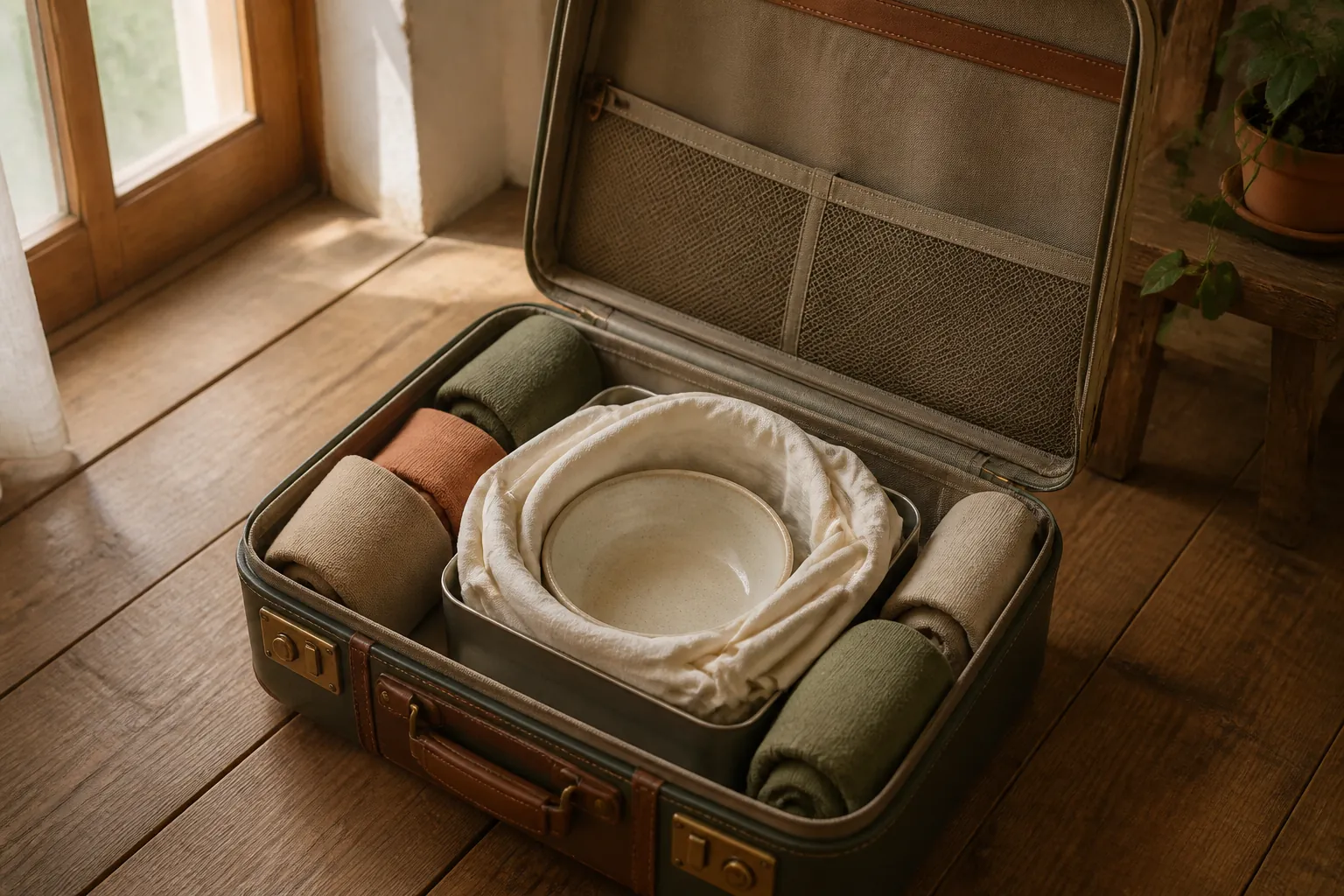
I pack for travel the way I pack for a workshop move: assume the bag will be dropped once. Not because carriers are careless by nature, but because stairs, bus floors, and overhead bins are unforgiving. Clay and glass survive that world only when three layers work together. Soft against the object. Something rigid around that soft layer. An outer bag that does not collapse into a corner.
Travelers often reverse the order. They nest a bowl in a sweater and call it done. The sweater moves. The bowl finds the zipper teeth. The sound you hear at home is the sound of a sequence that never existed.
Decide at the stall, not over the open suitcase
The packing decision begins while the object is still on the counter. If you cannot picture the wrap, the sleeve, and the place in the bag, do not buy it. Beauty is not a packing plan. Neither is optimism. Ask yourself where the hard edges are, how tall the piece is, and whether anything inside can rattle.
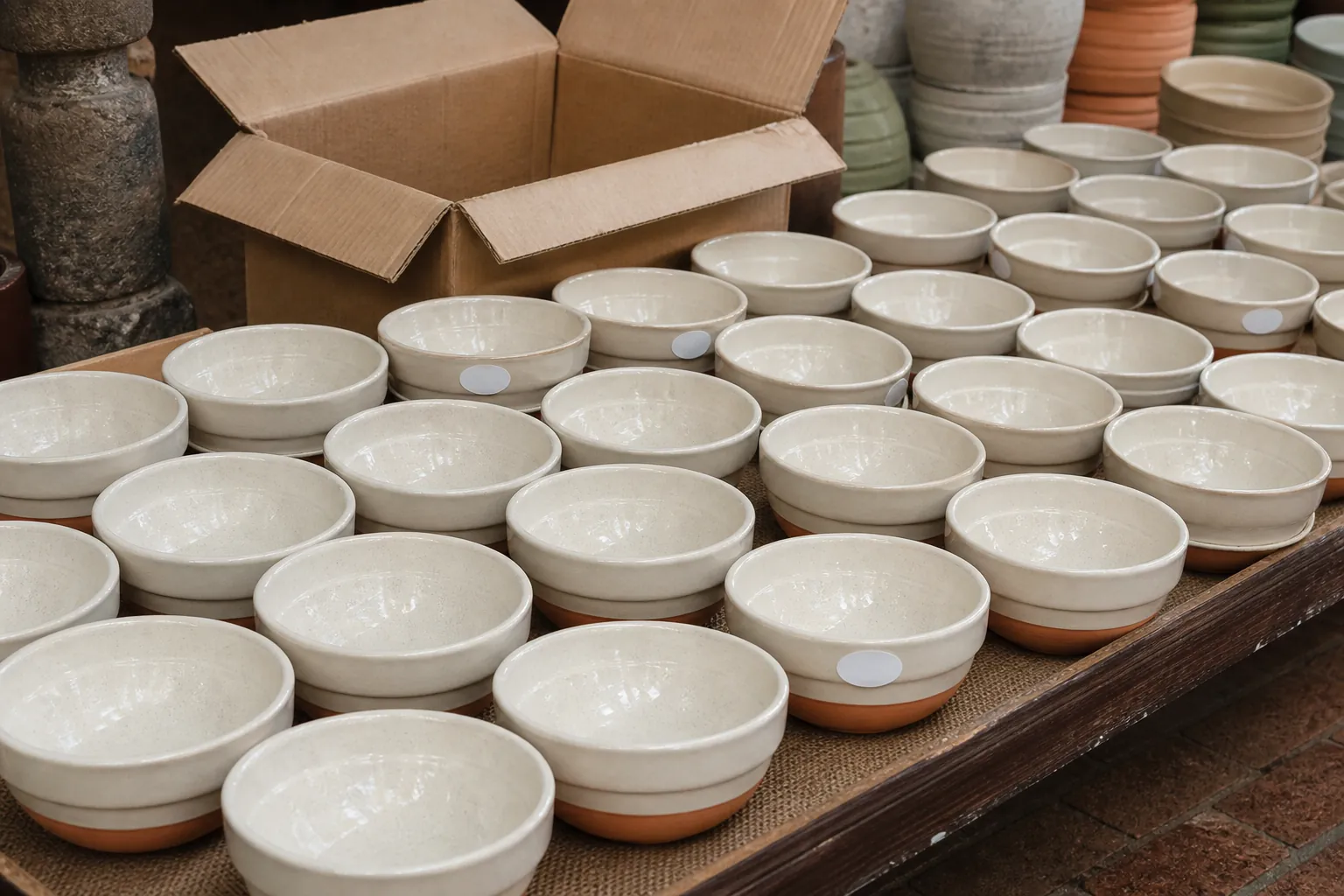
Hollow forms with thin walls, tall bottles with narrow necks, and pieces with protruding handles are the usual failures. A low, thick bowl is often kinder. A plate can travel if it is sleeved and kept flat, but only if the bag still has a flat zone that will not fold overnight.
If you cannot say the packing sequence in one breath, the object is not ready to leave the stall.
The wrap-sleeve-outer sequence
Use clothes you already carry. Clean socks, a soft shirt, and a scarf are better than a single towel thrown loosely around a jar. Follow the order every time:
- Wrap the object so cloth touches every hard surface and fills hollow spaces.
- Slide the wrapped piece into a rigid sleeve — a tin, a hard case, or a small box that keeps its shape.
- Place that sleeve inside an outer bag or a dedicated pocket that will not crush under other weight.
Soft wrap alone is not enough. Rigid sleeve alone is not enough if the object can still knock against the sleeve wall. Outer bag alone is not enough if the middle collapses. The three layers fail separately and succeed together.
What to put around the package
Once the sequence is complete, surround it with soft mass that cannot become a hammer. Rolled shirts work. A sweater works. Loose stuffing in one corner does not, because it migrates. Keep heavy shoes and books away from the fragile zone. Keep liquids in a different part of the bag entirely.
- Fill hollow cups and bowls so nothing rings inside
- Pad handles and rims before the sleeve goes on
- Keep the sleeved piece away from zipper teeth and frame corners
- Leave a little flex in the outer bag — overpacking turns soft cloth into pressure
- Recheck the package after every transport day, not only at the airport
Shapes that should stay on the stall
Some pieces are poor travelers even when the glaze is perfect. Long-stemmed glass, paper-thin porcelain, multi-piece sets that must stay nested, and anything with a repaired crack already telling you its history of stress. I also refuse objects that only fit if you empty half the bag. A purchase that steals the last day’s packing margin usually becomes the object left behind at the station.
If a seller offers newspaper and a thin plastic bag, treat that as a starting wrap, not a finished plan. Add your own cloth. Find a sleeve. If no sleeve exists in your kit — a soap tin, a hard glasses case, a small metal box — the piece needs a different journey or no journey at all.
After you arrive
Unpack fragile goods before you shake out dirty laundry. Check for hairline cracks in good light. Wash travel dust off with care if the material allows it. A piece that survived the trip still needs a job in the house: a place on a shelf where hands will use it, not a drawer where it waits to be forgotten.
Packing cannot promise arrival. It can only remove the most common ways clay and glass fail. The rest is luck, handling, and the honesty to leave a beautiful object where it is when the sequence cannot be made real.